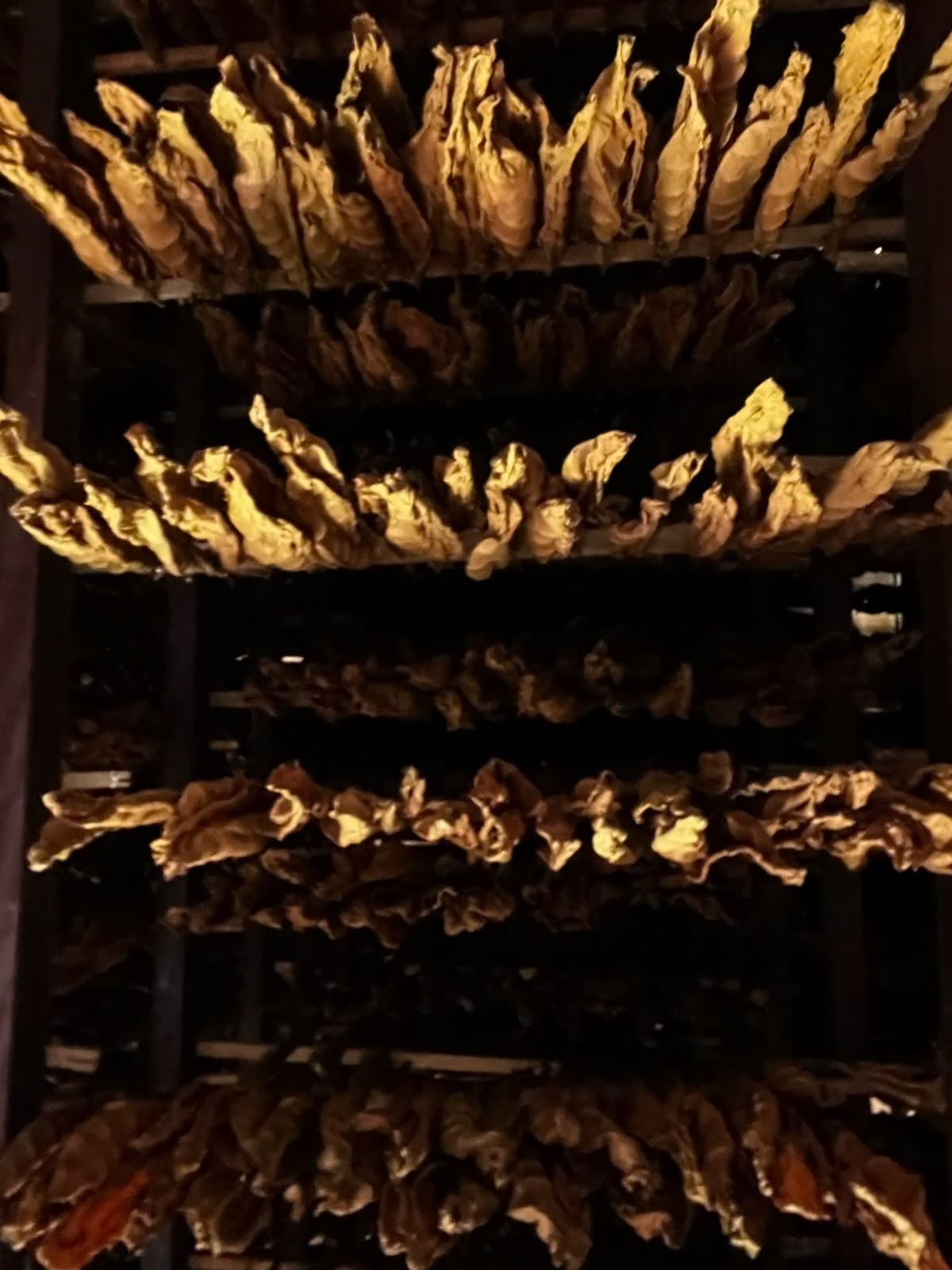
When an appreciator identifies notes of cocoa, coffee, wood or spices in a premium cigar, it is common to imagine that these aromas arise exclusively during tasting. However, the real construction of this sensory profile begins much earlier, still in the Curing and fermentation shelves.
These two stages are among the most important processes for producing tobacco for large handmade cigars and are fundamental to transforming a newly harvested leaf into a raw material capable of offering complexity, balance and elegance.
The Cure: The First Step of Transformation
After harvesting, the tobacco leaves undergo a healing process, traditionally carried out in shelves that allow controlled air circulation.
During this period, which can last for several weeks, the leaf gradually loses its natural moisture, while at the same time, important chemical changes occur that reduce overly intense plant characteristics and begin the development of the aromas that will later be noticed during the smoking experience.
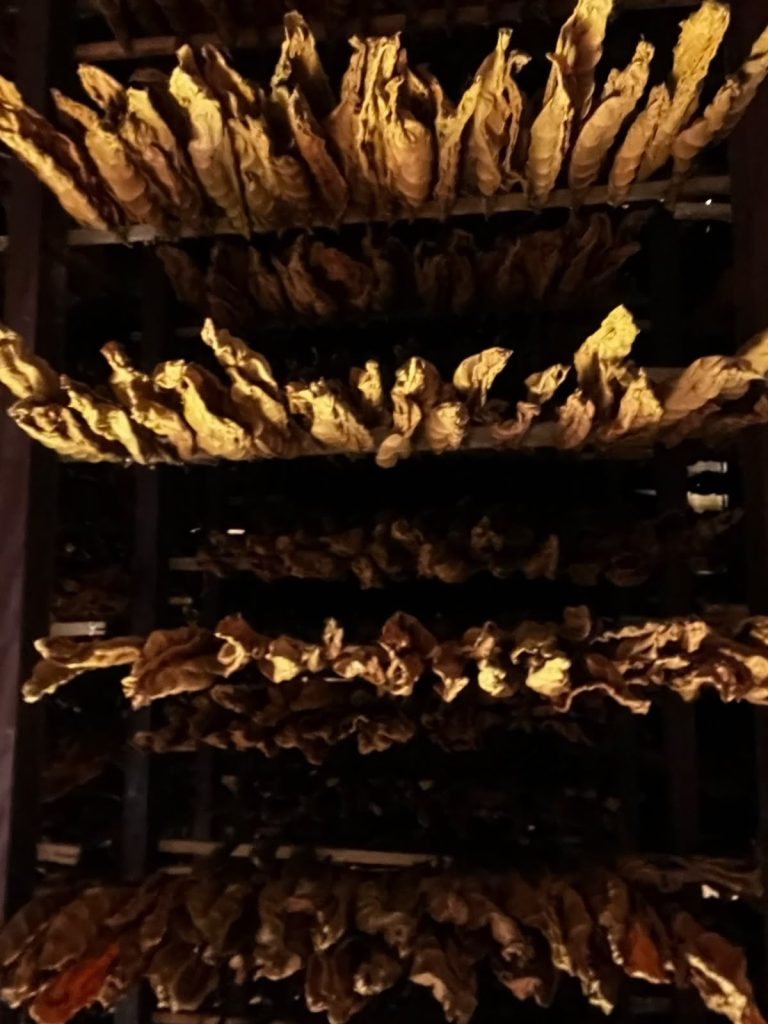
It is at this time that the vibrant green of the leaf gives way to the golden and brown tones that characterize cigar tobacco.
In the Baian Recóncavo, knowledge accumulated over generations has allowed techniques to be perfected that can preserve tobacco’s natural qualities while promoting its aromatic evolution.
Fermentation: Where Complexity Is Born
After healing, the leaves enter one of the most fascinating stages of production: fermentation.
Carefully stacked in pillars, the leaves undergo a natural heating process caused by the biological activity and internal chemical reactions of tobacco.
During this phase, unwanted compounds are eliminated and others are processed, giving rise to more refined and complex aromas.
It is at this point that characteristics begin to emerge that can resemble chocolate, roasted coffee, cedar, leather, and spices.
Temperature, humidity and fermentation time require constant monitoring, and small variations can significantly alter the final result.
The experience of the master fermenters therefore plays a decisive role in product quality.
Tradition and Knowledge
In the world of premium cigars, fermentation is often compared to the aging of large wines. Both processes require patience, technical knowledge and deep respect for raw materials.
In the tobacco industry in the Baian Recóncavo, this stage represents the meeting between agricultural tradition and craftsmanship.
Each leaf carries with it the characteristics of the soil, climate, and human work that shaped its identity.
When the appreciator lights a cigar, he is experiencing the result of months and in some cases years of careful transformation.
It’s this combination of nature, technique and time that makes big cigars so rich in aromas, flavors and stories.